
Nearshoring growth along major manufacturing hubs like Monterrey, Saltillo, and Querétaro has turned cross-border trucking capacity between Mexico and the United States into a scarce resource. When produce harvesting, industrial manufacturing, and retail peak seasons overlap, southbound and northbound freight volumes diverge rapidly. Unprepared shippers face extended border dwell times, equipment shortages, and steep spot market rates.
Managing freight across ports like Laredo, El Paso, and Otay Mesa requires navigating specific operational constraints. Capacity bottlenecks rarely stem from a shortage of highways; they happen at transfer cross-docks, drayage handoffs, and customs clearance points where equipment and driver availability stall.
Mitigating Structural Equipment Imbalances
The fundamental challenge of Mexico-US cross-border lanes is directional imbalance. Northbound shipments carrying manufactured goods, electronics, and produce regularly outnumber southbound shipments carrying raw materials or finished consumer goods. This creates a chronic deficit of standard 53-foot dry vans and temperature-controlled trailers inside Mexico.
To secure capacity during volume spikes, shippers must avoid relying on spot market drayage operators. Establishing dedicated equipment repositioning programs or utilizing door-to-door through-trailer service agreements ensures Mexican drayage drivers have pre-allocated empty trailers waiting at border yards.
Optimizing the Three-Leg Transport Model
Most cross-border freight moves via a three-leg transfer model involving a Mexican linehaul carrier, a localized drayage or border transfer operator, and a US linehaul carrier. Delays on any single leg compound border wait times.
Streamlining this process requires aligning carrier partnerships before peak surges begin:
- Validate that your Mexican freight forwarder or logistics provider maintains direct interchanges with authorized B-1 visa drivers and vetted US motor carriers.
- Ensure mandatory documentation including the Mexican Carta Portilla complement and US CBP pre-filed entry summaries is fully cleared prior to the truck arriving at the Mexican border facility.
- Shift high-volume, non-perishable freight lanes toward intermodal rail networks at key interchange points like Laredo or Eagle Pass to relieve pressure on over-the-road trucking capacity.
Working with specialized cross-border logistics partners prevents physical equipment from idling at transfer yards while administrative disputes are resolved.
FAQ
Why does cross-border trucking capacity tighten so drastically during peak season? Peak retail shipping, agricultural harvest cycles, and automotive production schedules converge simultaneously, creating a surge in northbound freight demand that exceeds available trailer and driver capacity.
What is the difference between direct through-trailer service and transloading? Through-trailer service keeps freight inside the same trailer from origin to destination, avoiding physical handling at the border. Transloading involves offloading cargo at a border cross-dock from a Mexican trailer into a US trailer.
How far in advance should cross-border truckload capacity be locked in for peak season? Shippers should finalize core contract volume allocations and lock in primary carrier lane commitments 60 to 90 days before peak seasonal spikes begin.
What documents are required to prevent truck delays at Mexican and US customs? Trucks require a validated Bill of Lading with the Mexican Complemento Carta Portante, commercial invoices, and a cleared US Customs Entry Summary or Automated Manifest System (AMS) filing prior to border arrival.
Can intermodal rail fully replace over-the-road trucking for Mexico-US shipments? Intermodal rail is ideal for heavy, long-haul freight with flexible delivery windows, but over-the-road trucking remains necessary for time-sensitive, high-value, or temperature-controlled cargo.
Book a Free Consultation Call to audit your cross-border supply chain. We analyze your lane volumes, secure dedicated equipment allocations, and streamline border customs procedures to keep your freight moving smoothly during peak season.
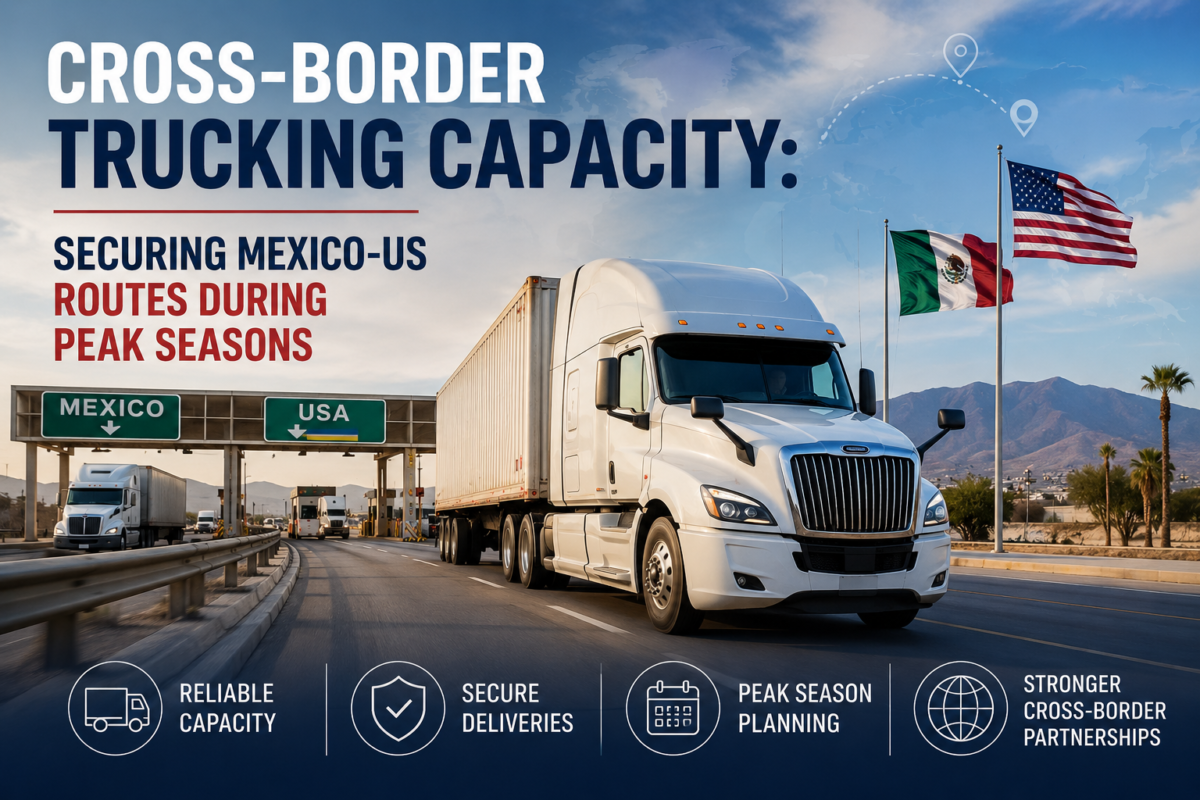
Building Resilient Peak-Season Strategies
Managing cross-border capacity between Mexico and the US requires shifting from reactive spot-market booking to proactive lane management. Shippers who audit their border operations early, diversify transport modes, and establish clear driver interchange protocols protect their supply chains from predictable seasonal gridlock. Evaluating historical entry delays and locking in core equipment allocations months in advance ensures cargo moves reliably across the border regardless of peak market pressures.