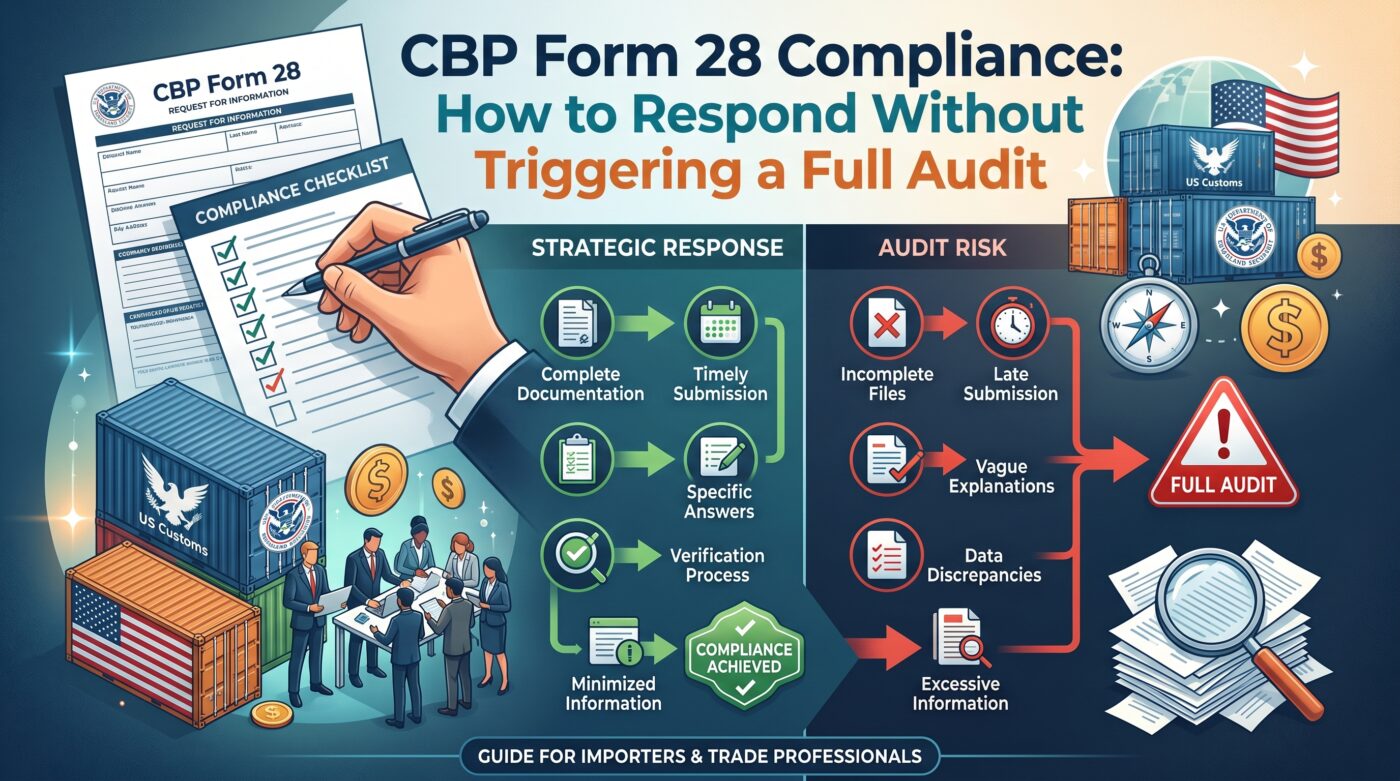
A CBP Form 28 (Request for Information) landing in your entry portal means an Import Specialist spotted an inconsistency in your filing and wants documentation before taking action. It is not a penalty notice, but mishandling it can quickly expand a routine query into a formal audit under 19 U.S.C. 1509.
CBP issues these inquiries to verify tariff classification logic, valuation adjustments like assists and royalties, or country of origin criteria. You have 30 calendar days from the issuance date to provide documentation. Missing that response window generally causes CBP to issue a CF-29 Notice of Action, rate advancing your merchandise and assessing higher duties automatically.
Why Importers Trigger Deeper Inquiries
The most common mistake on a Form 28 response is over-providing documentation. Handing over extraneous internal emails, unrequested purchase orders, or unrelated manufacturing files exposes details CBP never asked for, opening entirely new lines of questioning.
Stick strictly to what the notice specifies. If the request questions a Harmonized Tariff Schedule (HTS) classification, supply the technical data sheet and bill of materials for that exact line item. Keep unrelated product lines off the submission unless the form explicitly demands them.
Assembling a Controlled Response
Pull the original entry summary, commercial invoice, and relevant technical sheets first. Compare the product description in your documentation directly against the General Rules of Interpretation (GRIs) for the contested tariff code. If CBP cites a prior administrative ruling, pull that decision to evaluate whether your item genuinely matches its parameters.
If reviewing your past shipments reveals the same classification issue spans multiple entries, submitting a one-off correction creates serious exposure. In that situation, you must evaluate filing a Prior Disclosure under 19 U.S.C. 1592(c)(4) before CBP initiates a formal penalty investigation.
Coordinate your final packet through your brokerage team rather than contacting the port alone. A response structured around CBP’s exact reason codes prevents misunderstandings and resolves the inquiry cleanly.
FAQ
Does receiving a Form 28 mean my company is being audited?
No. A Form 28 is an initial inquiry into a specific entry or line item. An audit occurs when CBP formally initiates an inquiry under 19 U.S.C. 1509 or schedules a focused assessment.
Can I request an extension to answer a Form 28?
Yes. Import Specialists frequently grant a 30-day extension if you submit a written request before the original deadline explaining that technical data or supplier records require more time.
What happens if I ignore the Form 28?
CBP will conclude you cannot substantiate your declared classification, value, or origin. They will issue a CF-29 to reclassify the entry and assess additional duties.
Can CBP issue a Form 28 on a liquidated entry?
Generally no. CBP uses Form 28 on unliquidated entries to determine proper treatment prior to liquidation.
Should I submit product samples with my response?
Only if requested. Unsolicited samples complicate handling and can trigger unnecessary lab testing that slows down resolution.
Book a Free Consultation Call if you received a Form 28 and need to review your documentation. We verify your records, protect your trade data, and submit a compliant response before the clock runs out.