For U.S. importers navigating volatile global supply chains, port congestion, cargo holds, and intensive customs examinations represent severe financial and operational disruptions. A single physical inspection by U.S. Customs and Border Protection (CBP) at a Centralized Examination Station (CES) can delay container delivery by 5 to 14 days and cost between $1,500 and $5,000 in drayage, storage, and exam fees.
To mitigate these operational bottlenecks, many enterprise and mid-market importers evaluate joining the Customs Trade Partnership Against Terrorism (CTPAT)—CBP’s flagship voluntary supply chain security program. However, achieving and maintaining CTPAT certification requires substantial upfront investments in physical security, vendor audits, cybersecurity frameworks, and dedicated compliance personnel.
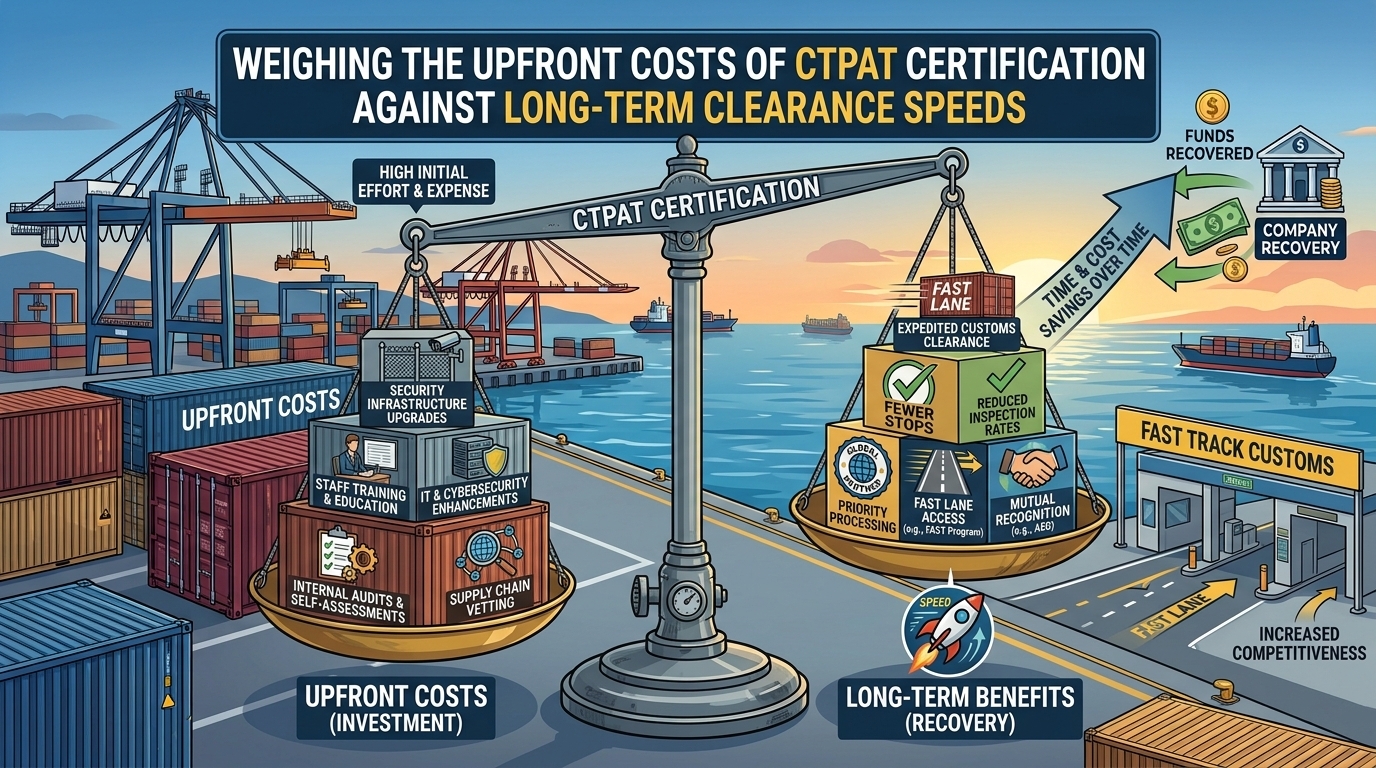
Importers must perform a rigorous financial and operational cost-benefit analysis, weighing the immediate upfront implementation expenses against the long-term ROI of reduced examination rates, priority processing, and supply chain resiliency.
The Financial Investment: Upfront and Ongoing Costs of CTPAT
Achieving CTPAT certification isn’t merely a paperwork exercise; it requires a comprehensive operational transformation across your internal organization and foreign vendor network.
1. Physical and Facility Security Upgrades
Importers must ensure that their corporate headquarters, distribution hubs, and foreign manufacturing facilities comply with CTPAT Minimum Security Criteria (MSC).
Upfront expenses typically include:
- Perimeter Fencing and Lighting: Installing compliant security fencing, perimeter lighting, and access control gates.
- Surveillance Systems: Upgrading CCTV camera infrastructure to maintain 90-day video retention across cargo loading docks and container storage yards.
- Access Control and Visitor Tracking: Implementing keycard access systems, visitor logging protocols, and biometric security for sensitive IT and shipping areas.
2. Supply Chain Security Audits and Vendor Risk Management
CTPAT requires importers to conduct risk assessments across their entire tier-one supply chain.
- On-Site Foreign Supplier Audits: Conducting physical security audits of overseas factories, consolidation centers, and foreign logistics providers. For high-risk regions, this often requires hiring third-party auditing firms or deploying internal compliance personnel overseas.
- Security Questionnaires and Partner Vetting: Developing and maintaining continuous monitoring systems to verify that non-certified business partners (foreign manufacturers, brokers, freight forwarders, ocean carriers) adhere to CTPAT security standards.
3. Cybersecurity Mandates
Updated CTPAT Minimum Security Criteria place heavy emphasis on cybersecurity resilience to prevent ransomware attacks and supply chain data breaches.
- Implementation of multi-factor authentication (MFA), end-to-end data encryption, regular penetration testing, and formal employee cybersecurity awareness training.
4. Internal Administrative and Personnel Overhead
- Professional Consulting Fees: Importers frequently hire specialized trade compliance consultants to draft CTPAT Security Profiles, draft Standard Operating Procedures (SOPs), and manage the portal application.
- Dedicated Staffing: Assigning or hiring an internal CTPAT Supply Chain Security Officer to manage annual risk assessments, manage validation audits, and update portal entries.
Total Estimated Investment: For mid-market importers, initial implementation costs range from $25,000 to $75,000, while multi-facility enterprise importers may invest $100,000 to $250,000+. Ongoing annual maintenance costs average $10,000 to $40,000 annually.
The Operational Returns: Long-Term Clearance Speeds and Financial Benefits
While the upfront financial commitment is significant, the quantifiable benefits delivered by CBP to CTPAT tier partners generate significant multi-year returns.
1. Drastic Reduction in CBP Examination Rates
The primary tangible ROI of CTPAT membership is a dramatic drop in physical and documentation inspection flags by CBP algorithms:
- Tier 1 Partners (Certified): Enjoy a significant reduction in CBP Automated Targeting System (ATS) risk scoring, resulting in 50% to 60% fewer physical examination holds compared to non-certified importers.
- Tier 2 Partners (Validated): Receive even higher risk score deductions following successful CBP validation audits.
- Tier 3 Partners (Green Lane): Reserved for top-tier importers exhibiting best-in-class security controls. Tier 3 members experience virtually zero routine physical examinations, entering the “Green Lane” for instant customs clearance.
Direct Financial Savings: Avoiding just 10 to 15 CES container examinations per year saves an importer $25,000 to $75,000 annually in direct exam, storage, and drayage fees alone—frequently offsetting the entire annual maintenance cost of the program.
2. Front-of-the-Line Priority Inspection Processing
When a CTPAT shipment is selected for examination (e.g., due to random statistical sampling or specific PGA enforcement mandates), the cargo receives priority front-of-the-line inspection status at the CES facility. Instead of waiting 7 to 10 days in a queue, CTPAT containers are moved to the front of the inspection line, cutting hold times down to 24 to 48 hours and drastically reducing port demurrage fees.
3. Business Resiliency and Priority Re-Start Following Disruptions
In the event of a major national security emergency, cyberattack, or port closure (such as vessel strikes or severe weather disruptions), CBP prioritizes the processing and clearance of CTPAT cargo ahead of all standard commercial shipments once port operations resume.
4. Mutual Recognition Arrangements (MRAs)
CTPAT partners gain cross-border trade benefits through Mutual Recognition Arrangements (MRAs) established between CBP and foreign customs authorities—including Canada (PIP), Mexico (OEA), the European Union (AEO), Japan, South Korea, and the UK. Certified importers receive expedited export and import processing when shipping to and from MRA partner nations.
5. Assigned CTPAT Supply Chain Security Specialist (SCSS)
Members are assigned a dedicated CBP Supply Chain Security Specialist who serves as a direct point of contact inside CBP. Having an assigned SCSS allows importers to quickly resolve administrative holds, clarify policy ambiguities, and address supply chain bottlenecks through agency advocacy.
Strategic Decision Framework: Is CTPAT Right for Your Business?
Importers should calculate their CTPAT ROI by evaluating three core operational metrics:
- Annual Import Volume: Companies importing more than 100 to 200 ocean containers or high-value air shipments annually realize immediate net-positive returns through avoided exam costs and demurrage.
- Cargo Sensitivity and Lead-Time Criticality: Importers operating tight just-in-time (JIT) manufacturing lines or seasonal retail supply chains gain massive competitive advantages by eliminating unpredictable port hold delays.
- Historical Port Hold Frequency: If your commodity types or sourcing origins frequently trigger CBP inspection flags, CTPAT membership directly lowers your targeting baseline.
FAQ
How long does it take to obtain CTPAT certification from application to validation?
Initial application submission and review typically takes 60 to 90 days for Tier 1 certification. Formal CBP validation (achieving Tier 2 status) generally occurs within 1 year of initial certification.
Does CTPAT certification exempt an importer from FDA, USDA, or other PGA holds?
No. CTPAT is a CBP program focused on cargo security and customs trade compliance. Partner Government Agencies (such as FDA or USDA) maintain independent regulatory authority and may still issue holds for public health or agricultural inspections, though overall handling priority is enhanced.
What is the difference between CTPAT Tier 1, Tier 2, and Tier 3 status?
Tier 1 is granted upon initial approval of your online CTPAT Security Profile. Tier 2 is awarded after CBP conducts a successful physical validation audit of your facilities and supply chain. Tier 3 is reserved for validated partners who demonstrate exceptional security practices above and beyond basic MSC mandates.
Can small or mid-sized importers qualify for CTPAT certification?
Yes. CTPAT is open to active Importers of Record of all sizes, provided they have a documented security profile and import history entering the United States.
What happens if a foreign supplier fails a CTPAT security audit?
Importers don’t immediately lose CTPAT eligibility if a supplier has security gaps. Importers are required to issue a Corrective Action Plan (CAP) detailing the required security remediation steps and timelines for the vendor to achieve compliance.
Book a Free Consultation Call to evaluate CTPAT certification for your import operations. We conduct gap analyses, build compliant security profiles, prepare foreign vendor audit protocols, and guide your team through CBP validation.