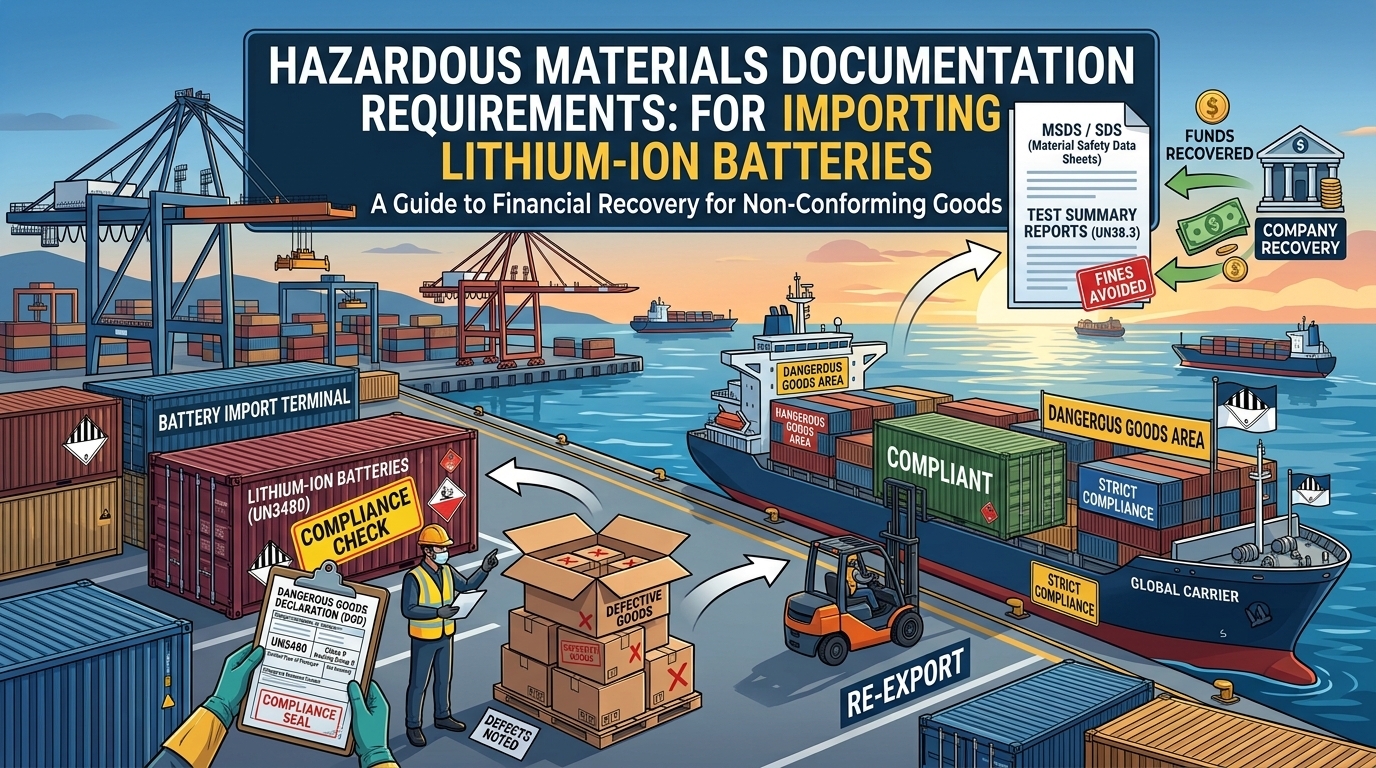
Importing lithium-ion batteries. The rapid global transition toward electrification across consumer electronics, electric vehicles (EVs), and industrial energy storage systems has driven an unprecedented surge in lithium-ion battery imports. However, because lithium batteries carry inherent risks of thermal runaway, internal short circuits, and severe fire hazards, U.S. regulatory agencies treat them as dangerous goods and Class 9 Hazardous Materials.
Importing lithium-ion cells, modules, or equipment packed with lithium batteries requires navigating an overlapping web of federal enforcement. U.S. Customs and Border Protection (CBP), the Pipeline and Hazardous Materials Safety Administration (PHMSA) within the Department of Transportation (DOT), the Federal Aviation Administration (FAA), and the U.S. Coast Guard strictly enforce safety compliance. A single paperwork mismatch or missing test summary can trigger immediate vessel holds, severe civil penalties exceeding $85,000 per violation, or mandatory cargo seizure at port terminals. Importing lithium-ion batteries
Classification of Lithium Batteries Under Dangerous Goods Codes
Before preparing shipping papers and customs entries, importers must establish the precise UN dangerous goods classification for their cargo. Lithium-ion batteries (rechargeable) are categorized under distinct UN numbers based on how they are packaged and integrated:
- UN 3480 (Lithium Ion Batteries): Standalone lithium-ion cells and battery packs shipped without equipment.
- UN 3481 (Lithium Ion Batteries Packed with Equipment): Batteries packaged together with the electronic device or machinery they are designed to power, but not installed in the device.
- UN 3481 (Lithium Ion Batteries Contained in Equipment): Batteries securely installed inside the structure or chassis of the device (e.g., laptops, smartphones, cordless power tools).
- UN 3536 (Lithium Batteries Installed in Cargo Transport Units): Large-scale utility energy storage systems (ESS) pre-installed in freight containers or trailers.
Core Documentation and Regulatory Compliance Requirements
To secure seamless customs clearance and transportation authorization across U.S. ports, importers must assemble and verify four essential documentation pillars before cargo loading.
1. UN 38.3 Test Summary (UN Manual of Tests and Criteria)
Every lithium-ion cell or battery design type imported into the United States must successfully pass rigorous safety testing outlined in Section 38.3 of the UN Manual of Tests and Criteria. This testing simulates extreme environmental conditions, including altitude simulation, thermal shock, vibration, external short circuit, impact/crush, overcharge, and forced discharge.
Under 49 CFR 173.185(a) and international modal codes (ICAO/IATA, IMDG Code), manufacturers and subsequent distributors must make a standardized “UN 38.3 Test Summary” document available to downstream transportation providers and customs authorities upon request.
The UN 38.3 Test Summary must explicitly state:
- Name, address, phone number, and website of the cell/battery manufacturer.
- Name and contact details of the accredited testing laboratory.
- Unique test report identification number and date of execution.
- Detailed description of the cell or battery (mass, Watt-hour rating, cell type).
- Explicit confirmation that the battery successfully passed tests T.1 through T.8.
2. Dangerous Goods Declaration (DGD) and Bill of Lading
For ocean and air cargo shipments containing Class 9 hazardous materials, a formal Dangerous Goods Declaration (DGD)—such as the IMO Dangerous Goods Declaration for sea freight or the IATA Shipper’s Declaration for air freight—is mandatory.
The shipping documentation must accurately state:
- Proper Shipping Name (e.g., “Lithium ion batteries”).
- Class 9 Hazard Classification and UN Number (e.g., UN 3480).
- Packing Group (n/a for Class 9, but specific packing instructions such as PI 965, PI 966, or PI 967 must be cited).
- Number and type of packages, net mass, and gross weight.
- Emergency Response Contact Information: A 24/7 emergency response telephone number (e.g., CHEMTREC or ChemTel) monitored by trained personnel who have immediate access to technical safety information regarding the specific battery shipment.
3. Safety Data Sheets (SDS / MSDS)
Although an SDS is primarily an OSHA hazard communication document for workplace safety, port officials, customs brokers, and drayage carriers require an up-to-date 16-section SDS compliant with the Globally Harmonized System (GHS). Section 14 (Transport Information) must align perfectly with the UN 38.3 Test Summary and dangerous goods manifest descriptions regarding UN numbers and modal transport restrictions.
4. State of Charge (SoC) Compliance Documentation
Air freight shipments of standalone lithium-ion batteries (UN 3480) are subject to strict State of Charge restrictions under IATA dangerous goods regulations and PHMSA mandates. Standalone lithium-ion batteries shipped via passenger or cargo aircraft must not exceed a 30% State of Charge (SoC) relative to their rated capacity, unless specifically authorized by a DOT special permit. Importers must ensure foreign suppliers issue a certified SoC declaration prior to air tender.
Packaging, Labeling, and Cargo Marking Rules
Physical compliance at the container or package level is audited closely by CBP Agriculture and Hazmat specialists at major gateways such as Los Angeles/Long Beach, New York/New Jersey, and Savannah.
- Class 9 Diamond Label: Packages containing lithium-ion batteries must display the standard Class 9 Miscellaneous Hazardous Materials hazard label featuring the battery icon and vertical black stripes.
- Lithium Battery Mark: Smaller packages or exempt shipments must display the standardized UN Lithium Battery Mark, indicating the UN number, emergency phone contact, and handling instructions.
- Cargo Aircraft Only Label: Packages containing standalone lithium-ion cells shipped via air must bear the “Cargo Aircraft Only” (CAO) handling label to prevent unauthorized placement on passenger flights.
- Rigid Outer Packaging: Outer packaging must comply with UN performance-oriented packaging standards (UN specification packaging, e.g., 4G fiberboard boxes) capable of withstanding drop and stacking tests under 49 CFR 178.
Managing Port Holds, Delays, and PHMSA Enforcement Actions
If CBP or PHMSA flags a lithium-ion battery entry due to incomplete UN 38.3 test summaries, mismatched Watt-hour ratings, or improper hazardous hazard labels, the container will be moved to a bonded Centralized Examination Station (CES) or detained at the marine terminal.
To resolve a hazmat administrative hold:
- Rapid Document Submission: Immediately upload verified UN 38.3 test certificates, 24-hour emergency contact authorizations, and manufacturer spec sheets via the FDA/CBP document portals or ACE DIS (Document Image System).
- On-Site Relabeling under Bond: If packaging lacks required Class 9 marks or CAO labels, submit a formal request to CBP/PHMSA to permit corrective labeling at a licensed hazardous materials bonded facility using certified hazmat technicians.
- Mitigation of Penalties: If PHMSA or CBP issues a Notice of Violation or proposed penalty assessment under 49 U.S.C. 5123, file a formal administrative response within 30 days demonstrating reasonable care, corrective action protocols, and proof of structural testing compliance.
FAQ
What is the maximum Watt-hour (Wh) rating for lithium-ion cells to be shipped under simplified consumer exceptions?
Individual lithium-ion cells with a Watt-hour rating of 20 Wh or less, and battery packs with a rating of 100 Wh or less, may qualify for certain simplified packaging exceptions under 49 CFR 173.185(c), though UN 38.3 testing remains mandatory.
Can defective or damaged lithium batteries be imported for repair or disposal?
Damaged, defective, or recalled (DDR) lithium-ion batteries represent severe safety hazards and are strictly prohibited from air transport. Importation via vessel or ground freight requires special packaging (such as fire-suppressant containers) and explicit PHMSA approvals or special permits under 49 CFR 173.185(f).
Who is legally liable for hazardous materials violations on import entries?
Both the foreign shipper and the U.S. Importer of Record share regulatory responsibility under DOT and CBP rules. The Importer of Record remains directly liable for ensuring that imported cargo entering U.S. commerce complies fully with 49 CFR hazardous materials regulations.
What is the UN 38.3 test summary requirement, and is it mandatory for every entry?
Yes. International regulations mandate that manufacturers and distributors provide a UN 38.3 Test Summary upon request for all lithium cells and batteries manufactured after July 1, 2003.
Are lithium batteries subject to Section 301 tariffs when imported from China?
Yes. Most lithium-ion battery subheadings under HTS Chapter 85 (such as 8507.60.00) are subject to statutory Column 1 duty rates as well as additional Section 301 trade remedy tariffs when originating from China.
Book a Free Consultation Call to audit your lithium-ion battery import compliance program. We review your UN 38.3 test summaries, verify Class 9 hazmat documentation, resolve CBP and PHMSA port holds, and keep your energy storage supply chain moving safely.