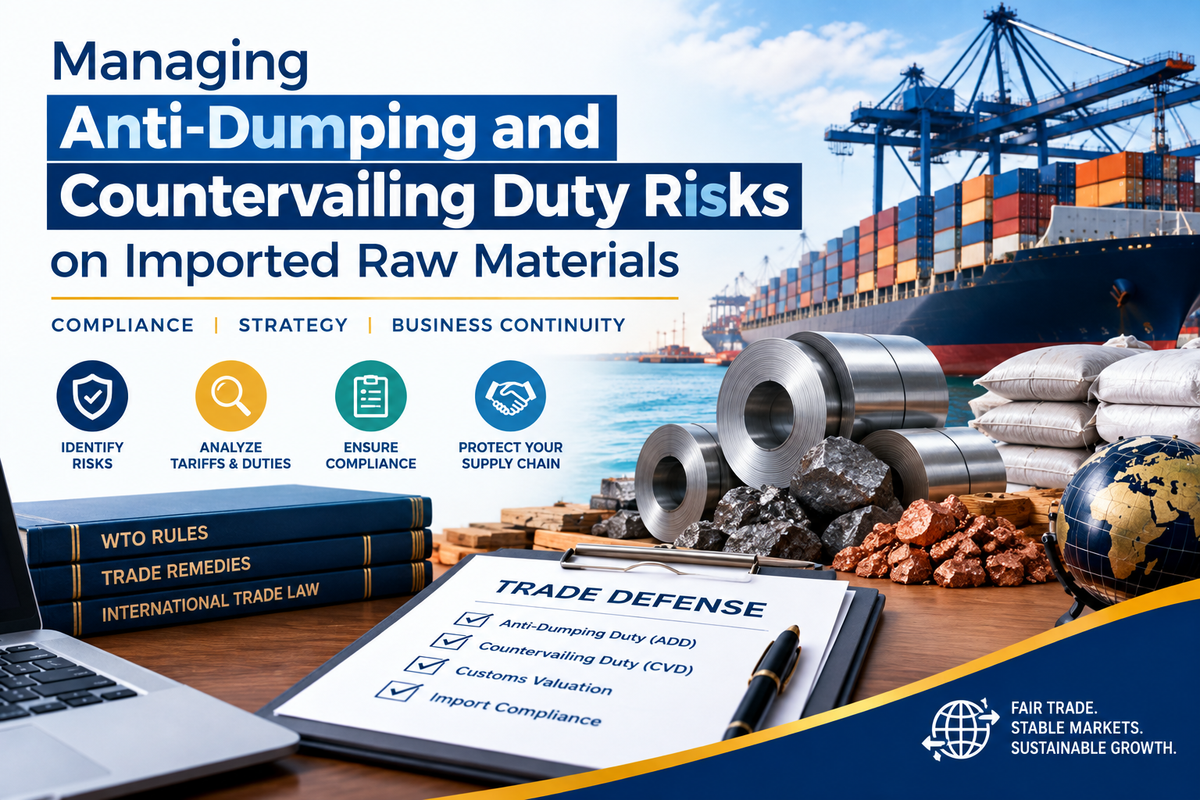
Managing AD/CVD Risks. Importing raw materials like steel, aluminum, chemicals, and solar components exposes businesses to anti-dumping (AD) and countervailing duties (CVD) administered by the U.S. Department of Commerce and enforced by CBP. Unlike standard tariffs, AD/CVD cash deposit rates established at entry are provisional. Importers remain vulnerable to retroactive duty adjustments years later following final administrative reviews.
Failing to identify that an imported material falls within an AD/CVD scope order can lead to steep retroactive duty bills, interest charges, and formal evasion investigations under the Enforce and Protect Act (EAPA).
Core Vulnerabilities in Raw Material Supply Chains
Managing trade remedy exposure requires tracking three primary operational risk zones:
Scope Ambiguity and Tariff Classification: Commerce defines AD/CVD scope by written narrative description, not simply by Harmonized Tariff Schedule (HTS) codes. Even if an entry code is absent from an order’s reference list, the physical specifications of the material may still pull it into scope.
Third-Country Processing and Transshipment: Sourcing materials converted in secondary jurisdictions carries significant origin risk. Minor finishing operations, slicing, blending, or repackaging rarely confer substantial transformation, leaving the goods subject to the baseline order of the country of raw origin.
Retroactive Duty Rate Adjustments: Importers deposit estimated duties at entry, but Commerce calculates final assessment rates retrospectively during annual administrative reviews. An initial 15% cash deposit can surge to over 200% upon final liquidation, creating severe retroactive cash liabilities.
Four-Step Protocol to Control AD/CVD Exposure
Review Written Scope Language Against Technical Specs: Compare supplier mill test certificates, chemical compositions, and production dimensions directly against Commerce scope descriptions published in the Federal Register. Do not rely solely on the broker’s HTS code matching.
Request a Formal Commerce Scope Ruling: If physical characteristics or processing methods leave room for doubt, file a formal Scope Ruling request under 19 C.F.R. § 351.225. A binding determination from Commerce provides statutory certainty and shields entries from retroactive duty exposure.
Audit Vendor Supply Chains and Traceability Records: Require Tier-1 and Tier-2 suppliers to provide verifiable melt-and-pour records, extraction certificates, and complete production logs. Verify that intermediate manufacturing steps in third countries generate a new article of commerce with a distinct name, character, and use.
Monitor Annual Administrative Reviews and Retain Reserves: Follow Commerce review initiations and preliminary determinations for your specific foreign manufacturer. If review trends indicate escalating dumping margins, adjust cash reserves to absorb retroactive rate advances upon final liquidation.
Enforcement Realities Under EAPA
CBP uses the Enforce and Protect Act to investigate allegations of duty evasion brought by domestic competitors or initiated by the agency itself. EAPA investigations authorize CBP to place interim measures on unliquidated entries within 90 days, requiring continuous bonds and immediate cash deposits. Maintaining clear supply chain records is necessary to rebut evasion claims before interim measures halt operations.
FAQ
What is the difference between anti-dumping and countervailing duties?
Anti-dumping duties counter foreign merchandise sold below fair market value or production cost. Countervailing duties offset unfair foreign government subsidies, tax credits, or below-market raw material inputs.
Can my customs broker determine if my goods are subject to AD/CVD?
Brokers can flag suspected HTS codes, but determining whether an item meets the technical narrative description of an order is the legal responsibility of the Importer of Record under reasonable care standards.
How long after entry can CBP issue retroactive AD/CVD duty bills?
Entries subject to AD/CVD remain unliquidated until Commerce completes its annual administrative review and sends liquidation instructions to CBP, a process that frequently takes two to four years from entry date.
What happens if I unknowingly import goods covered by an AD/CVD order?
CBP will issue supplemental duty bills for unpaid cash deposits plus statutory interest. If evidence indicates gross negligence or intentional misclassification, CBP will initiate penalty proceedings under 19 U.S.C. 1592.
Can I get a refund if Commerce sets the final duty rate lower than my cash deposit?
Yes. If the final margin determined during the administrative review is lower than the cash deposit rate paid at entry, CBP refunds the excess duty with interest upon liquidation.
Book a Free Consultation Call to audit your raw material supply chain, verify Commerce scope determinations, and protect your business from surprise AD/CVD liabilities.