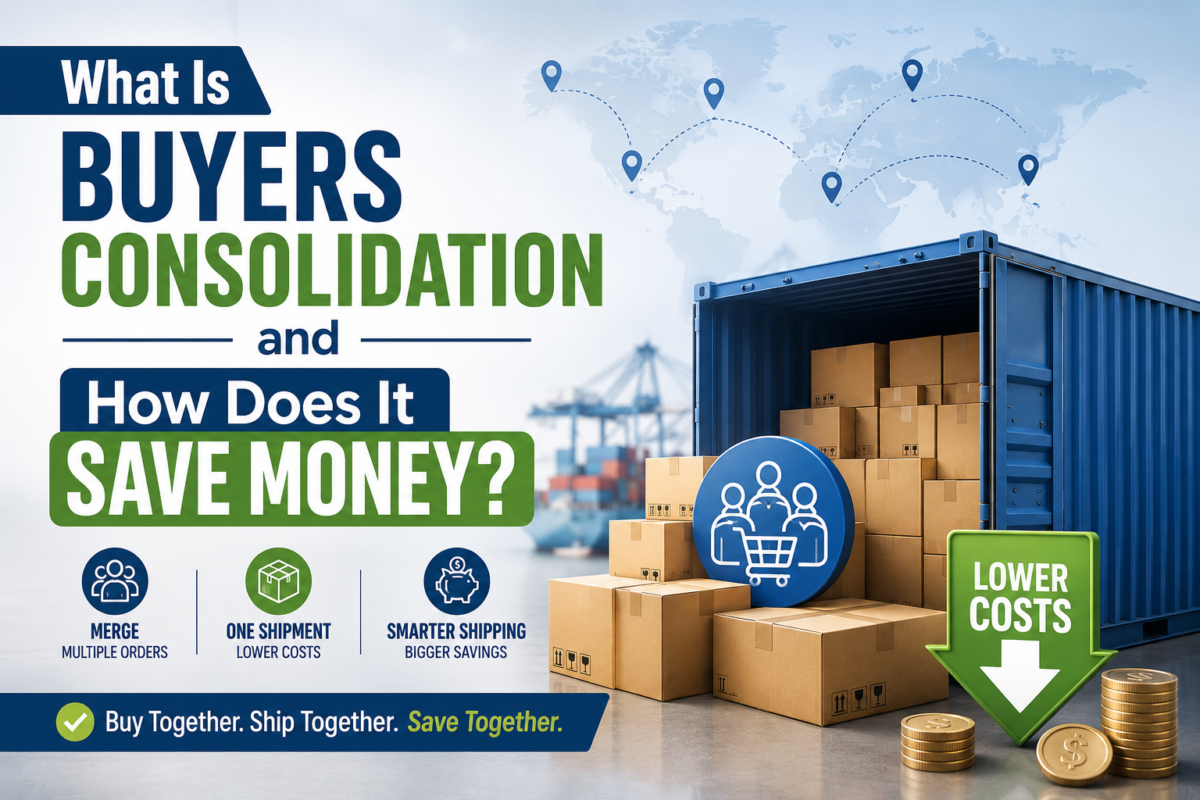
Importers purchasing merchandise from multiple overseas suppliers often face inflated logistics charges when shipping small, individual orders. Shipping multiple Less-than-Container Load (LCL) packages creates redundant origin handling fees, high per-cubic-meter ocean rates, and repeated customs brokerage filing expenses. Buyers consolidation eliminates these inefficiencies by combining multiple vendor orders into a single, dedicated Full-Container Load (FCL) shipment.
By establishing an origin consolidation program, businesses maintain direct control over inventory loading, lower unit freight costs, and streamline customs clearance upon arrival at domestic ports. Below is an operational breakdown of how buyers consolidation works and why it drives immediate supply chain savings.
The Mechanics of Origin Buyers Consolidation
In a standard LCL scenario, a freight forwarder collects cargo from various unrelated companies and co-loads them into a single container. This exposes your inventory to third-party shipping delays, container congestion, and increased risk of cargo damage during multiple handling stages.
Under a buyers consolidation model, an overseas logistics facility acts as your central hub. Multiple vendors deliver smaller orders directly to this specialized warehouse. The logistics team inspects, sorts, and packs your orders into a single, dedicated container sealed exclusively for your enterprise.
Five Ways Buyers Consolidation Reduces Import Expenses
- Lower Ocean Freight Rates: FCL ocean container rates offer significantly lower per-cubic-meter costs compared to tariff-heavy LCL volume rates.
- Eliminated Redundant Customs Fees: Instead of paying separate broker filing fees and Merchandise Processing Fees (MPF) for each vendor order, cargo clears under a single consolidated entry.
- Reduced Destination Handling Charges: Standard LCL shipments face expensive Container Freight Station (CFS) de-consolidation fees at destination ports. FCL containers bypass CFS warehouses and move directly to your facility.
- Minimised Risk of Cargo Damage: Dedicated containers are loaded, sealed, and locked at origin, eliminating intermediate handling steps that lead to product breakage or loss.
- Pre-Shipment Quality Control: Staging goods at an origin consolidation warehouse allows your team to perform quality inspections and vendor background checks before international transit.
Streamlining Customs Entry and Regulatory Compliance
Clearing multiple small shipments through U.S. Customs increases administrative overhead and probability of entry holds. Buyers consolidation allows your customs broker to process entries efficiently under structured commercial invoices and combined bills of lading.
Direct container management also improves cargo tracking and transit reliability. By selecting dedicated shipping lines and direct vessel calls, importers avoid the unpredictable discharge schedules common to public LCL consolidation networks.
Optimizing Your Total Landed Cost Strategy
Implementing a buyers consolidation framework shifts your logistics model from reactive freight booking to proactive supply chain management. Combining order consolidation with optimized Incoterms—such as switching from EXW to FCA or FOB—gives your company full visibility over international freight contracts and terminal charges.
For importers re-exporting consolidated merchandise or supplying international clients, combining consolidation programs with statutory duty drawback yields additional capital recovery. Reclaiming up to 99% of duties on exported inventory further drives down your overall landed costs.
Frequently Asked Questions
What is the primary difference between standard LCL shipping and buyers consolidation? Standard LCL mixes your cargo with shipments from random third parties inside a shared container. Buyers consolidation combines multiple orders from your own selected suppliers into a dedicated Full-Container Load (FCL) managed exclusively for your company.
How does buyers consolidation lower customs entry expenses? By clearing cargo as a single consolidated FCL shipment rather than multiple separate LCL entries, importers pay a single Merchandise Processing Fee (MPF) and broker entry clearance fee instead of multiple redundant charges.
Can quality control inspections be conducted during origin consolidation? Yes. Origin consolidation facilities allow third-party or broker agents to perform pre-shipment quality checks and vendor background verification before goods are loaded into the container.
Ready to eliminate duplicate LCL fees and cut your ocean transit costs? Book a Free Consultation Call with AIT TAHIPO LLC and our logistics team will help you configure a custom origin consolidation program.