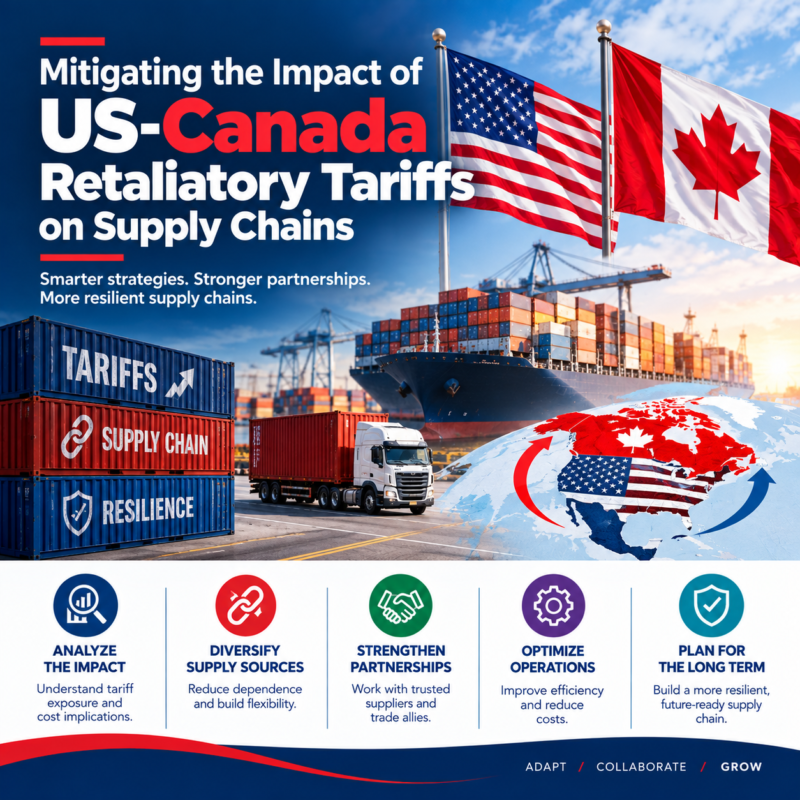
US-Canada. Trade escalations between the U.S. and Canada have increased cross-border logistics costs. As both nations implement surcharges ranging from 15% to 50% across industrial equipment, agricultural goods, paper, and consumer products importers must adopt duty mitigation strategies to protect operational margins.
Mitigating costs involves structuring customs entries to reduce assessable values, leveraging bonded operations, and utilizing duty recovery mechanisms.
Duty Mitigation Frameworks for Cross-Border Operations
Importers can deploy several legal mechanisms under U.S. customs law to manage trade war exposure:
- Duty Drawback (19 U.S.C. 1313): Companies importing Canadian goods subject to tariffs that process or incorporate them into finished products for subsequent re-export can recover up to 99% of paid duties, taxes, and fees.
- Foreign-Trade Zones (FTZs) and Bonded Warehouses: Admitting Canadian goods into an FTZ or bonded warehouse defers duty payments until merchandise enters domestic commerce. Re-exporting directly from an FTZ eliminates trade war duties entirely.
- First-Sale Valuation: Multi-tiered supply chains can base customs entries on the manufacturer’s first-sale price to an intermediary rather than the higher final price to the U.S. importer, lowering total taxable value.
Managing Supply Chain Counter-Measures
U.S. businesses with two-way cross-border operations must account for Canadian counter-tariffs on U.S. exports.
- Identify Goods on Canadian Surtax Lists: Canadian counter-tariffs target U.S. HS headings including steel, dairy, appliances, agricultural equipment, and electronics.
- Audit Foreign Sub-Assembly: Goods manufactured in the U.S. but finished in Canada may trigger retaliatory duties upon crossing the border unless structured under processing exemptions.
- Review Incoterms: Audit contract terms (e.g., DDP vs. DAP) to ensure responsibility for cross-border duty assessments is clearly allocated between counterparties.
Implementing First-Sale Valuation
First-Sale valuation allows importers to declare the value of goods based on the first sale in a multi-tiered transaction chain (e.g., factory to middleman vendor) rather than the final sale (middleman vendor to U.S. importer). Because ad valorem duties apply as a percentage of entered value, lowering the customs valuation directly reduces duty liabilities.
To establish a compliant First-Sale program under CBP standards, importers must satisfy three evidentiary criteria:
- Bona Fide Arms-Length Sale: Prove the initial sale between the foreign producer and vendor represents a genuine sale of goods, supported by purchase orders, commercial invoices, and proof of payment.
- Direct Destination to the U.S.: Demonstrate that at the time of the first sale, the goods were manufactured specifically for export to the United States, evidenced by shipping marks, packaging specs, or production orders.
- Absence of Non-Market Distortion: Ensure transaction prices reflect fair market valuation and are not distorted by related-party relationships or unrecorded assists.
Utilizing Foreign-Trade Zones (FTZs) and Bonded Warehouses FTZs and Customs Bonded Warehouses offer essential relief for managing cash flow under high tariff regimes. When Canadian merchandise enters an FTZ, it is assigned one of two primary statuses:
- Privileged Foreign Status: The HTS classification and duty rate are locked upon entry into the zone. When the finished good leaves the FTZ for U.S. consumption, duties are assessed based on the locked rate, preventing exposure to future tariff increases.
- Non-Privileged Foreign Status: Goods are classified and taxed based on the condition of the finished product as it leaves the zone. If processing in the FTZ changes the tariff classification to a heading carrying lower duties, the importer pays the lower rate.
Merchandise re-exported directly from an FTZ to international markets bypasses U.S. customs entry entirely, avoiding trade war duties.
FAQ
Can duty drawback be claimed on Section 232 or Section 122 tariffs?
Yes, unused or manufacturing duty drawback applies to most secondary tariff overlays, provided complete import and re-export tracing records are maintained.
Does assembling Canadian parts in a U.S. FTZ eliminate trade war tariffs?
Admitting goods into an FTZ in “privileged foreign status” freezes their classification and duty rate upon arrival, while “non-privileged foreign status” allows goods to be reclassified based on the finished product entering domestic commerce.
How do Canadian counter-tariffs affect U.S. distributors?
U.S. distributors shipping U.S.-origin products to Canadian customers face retaliatory surcharges at the Canadian border unless the goods qualify under specific Canadian duty relief or remission programs.
What documentation is needed to support a Duty Drawback claim?
Importers must provide CBP Form 7501 entry summaries, commercial invoices, export bills of lading, and internal inventory movement records establishing direct tracing or approved substitution under 19 U.S.C. 1313.
Can First-Sale valuation be applied retroactively?
Yes. Importers can apply First-Sale valuation to unliquidated entries via Post Summary Corrections or file administrative protests on liquidated entries within 180 days of liquidation.
Book a Free Consultation Call to evaluate your cross-border supply chain, implement First-Sale valuation, and set up a Duty Drawback program to recover trade war expenses.