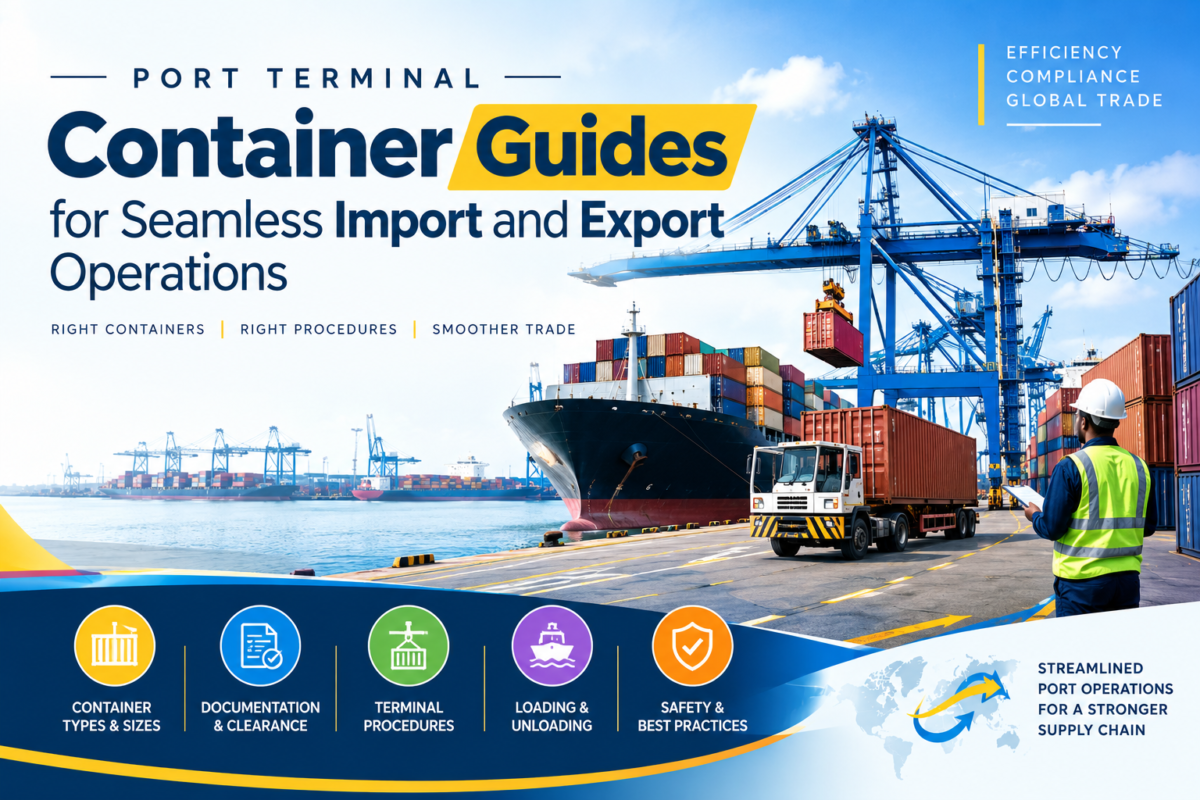
Port terminal container guides. Ocean terminal operations present some of the steepest daily cost risks across the international supply chain. When ocean containers discharge from container vessels, a strict countdown begins on marine terminal storage. Failure to navigate gate processes, appointment requirements, and clearance holds leads to expensive penalties that can erase shipment margins in days.
Marine terminal operators (MTOs) enforce strict tariff provisions governing container movement. Importers, drayage motor carriers, and logistics managers must maintain tight coordination between ocean carrier lines, port authority gates, and customs release statuses to avoid terminal storage and per diem assessments.
Structural Bottlenecks at Ocean Container Terminals
Managing marine terminal throughput requires proactive oversight across three critical friction areas:
Demurrage vs. Detention and Equipment Per Diem: Demurrage accrues when a loaded import container sits on terminal property beyond standard free time (typically four to five days). Detention, or equipment per diem, begins once the container departs the terminal gates and is kept beyond the ocean carrier’s free equipment window without returning empty.
Mandatory Terminal Gate Appointment Systems: Most major U.S. ports including Los Angeles, Long Beach, New York/New Jersey, and Savannah require drayage drivers to secure dual-transaction appointments before arriving. A shortage of available appointment windows can strand containers on the dock even when the cargo is cleared and ready for pickup.
Intermodal Chassis Deficits and Split Deliveries: Marine terminals frequently face bare-chassis shortages. When draymen must perform a “chassis split” retrieving an intermodal chassis from an off-dock depot before entering the terminal turn times lengthen and driver hours-of-service limits get strained.
Four Steps to Accelerate Port Container Pickups and Gate Movement
1. Monitor Vessel Discharge and Last Free Day (LFD): Track vessel ETA, container discharge timestamps, and the terminal’s posted Last Free Day using direct terminal operating system (TOS) EDI feeds. Do not rely on ocean bill of lading estimates. Verify that the ocean carrier has released its freight hold and that the terminal displays the container as physically mounted or sitting in an accessible wheel spot.
2. Verify Customs and Partner Agency Releases: Confirm electronic 1C release messages across ACE before dispatching drivers. If CBP, the FDA, or the USDA places an exam hold on the box, immediately direct transport to the designated Centralized Examination Station (CES) rather than allowing the container to sit in terminal demurrage.
3. Secure Terminal Appointments and Verify Driver Credentials: Match the delivery order (DO) with a motor carrier whose drivers hold active Transportation Worker Identification Credentials (TWIC) and are registered in the local port truck registry. Secure gate appointments during off-peak PierPass or night gate shifts to reduce drayage queue times.
4. Establish Immediate Empty Container Return Protocols: Once stripped at the distribution facility, route empty containers back to the terminal or designated empty depot immediately. Marine terminals frequently adjust empty-return rules, rerouting boxes to secondary yards on short notice. Confirm the carrier’s designated empty drop location through terminal portal announcements.
The Ocean Shipping Reform Act and Demurrage Disputes
Under the Ocean Shipping Reform Act (OSRA) and Federal Maritime Commission (FMC) regulations, ocean carriers and terminal operators cannot lawfully assess demurrage charges when container pickup is blocked by circumstances outside the cargo owner’s control. Such obstacles include port lockouts, gate appointment shortages, or unmounted yard positions.
Every terminal demurrage invoice must include mandatory statutory data elements detailing free time windows, availability dates, and clear dispute procedures. When terminals fail to provide cargo accessibility, timely digital dispute filings supported by gate-attempt logs can secure full fee waivers.
Frequently Asked Questions
What is the operational difference between demurrage and detention?
Demurrage applies to loaded containers resting inside the port terminal boundary past allowable free time. Detention applies to equipment held outside the terminal beyond the allowed window before returning empty to the steamship line.
How many free days do ocean terminals typically grant before demurrage begins?
Most ocean marine terminals grant three to five calendar or business days of free storage time from the moment the container is discharged from the vessel and made accessible.
What is a TWIC card and why do drayage drivers require one?
A Transportation Worker Identification Credential (TWIC) is a security clearance issued by the TSA required by federal law for maritime workers and drayage drivers to gain unescorted access to secure port facilities.
Can an importer contest demurrage caused by customs inspection holds?
While terminals historically assessed demurrage during customs inspections, current FMC guidelines under OSRA protect shippers when cargo is inaccessible. Moving containers promptly to an off-site CES minimizes these terminal storage disputes.
What happens if a terminal has no appointments available before my Last Free Day?
If you log and screenshot evidence demonstrating that appointment systems prevented container retrieval before the LFD expired, the FMC requires ocean carriers and MTOs to pause demurrage billing.
Book a Free Consultation Call to audit your drayage workflows, eliminate terminal demurrage risks, and establish container management across major port gateways.